

With councils across the UK under pressure to decarbonise their fleets, reduce air pollution in town centres and set an example for their communities, all against a backcloth of tightening budgets, Zimbl provides the perfect solution and is already making significant headway working with local government in Oxfordshire and Buckinghamshire.
Why Zimbl?
What are the benefits of Zimbl to councils?
There are many benefits:

Delivery to door electric car and van hire for parish councils to offer residents. Z Base also supports council fleets including planning, social care, parks and waste with managed EV hire that removes procurement and depreciation admin, and avoids charging capex. Our data platform tracks carbon and cost savings.

Can be incorporated into local government-owned sites featuring its full suite of services including as a minimum EV hire and charging. It can also include a range of other Zimbl branded services and facilities including e-bike hire, smart and sustainable energy supply, a farm food shop, cafe, and coworking spaces.

A bigger version of Z-Hub and ideal for local government-owned land in more densely populated communities. Features café and retail facilities operated by established third party brands on a concession basis
What technology drives the Zimbl operations?
Our future proof energy and technology platform underpins every Zimbl operation.
Through our tech platform, Z-App, residents, workers and visitors interact with every aspect of their community’s mobility, energy and shared amenities. It is not a fleet management tool. It is the interface between a person and the place they live and tracks utilisation, carbon savings, modal shift and community engagement in real time — giving local authorities the data they need to demonstrate the value of Zimbl to local taxpayers.
How many services do local authorities need to commit to when deciding on a Zimbl hub or Zimbl Enterprise solution?
Services are customisable and can be selected by a local authority from the full range offered by Zimbl, according to their requirements. Councils can also decide if they want to use preferred outsourced providers for the café and retail outlets on a concession basis.
As a minimum the services must include Zimbl’s EV and bike hire, EV charging and co-working facility as these are critical to the long-term success of the operation.
Who manages the Zimbl’s operations?
Zimbl is solely responsible for the management of all its operations. This includes cleaning, staffing, marketing, service charges, as well as the maintenance of electric cars, vans and bikes for hire and the EV charging station.
Who constructs the Zimbl facilities?
There is a choice of using one of Zimbl’s construction partners or the contractor already on site if Zimbl is part of a new development.
Z-Base requires no construction to take place. The only requirement will be parking bays allocated to Zimbl’s electric car and van fleet for collection and drop off purposes.
What are the costs associated with introducing a Zimbl operation by a local authority?
All Zimbl transactions with local authorities will be on a partnership basis.
Unless a council is interested in fully or part funding a Z-Hub or Z-Enterprise, the only cost is to support our dedicated EV-hire operation, Z-Base, to enable a low-cost sustainable mobility service for local people to get around at a time when they are struggling with the cost of living. This will be in the form of a subsidy until the operation breaks even. Once the operation moves into profit this will be shared between Zimbl and the local council. As demand continues to grow for Z-base in the community, Zimbl will also invest in council-owned parking bays for their growing fleet of vehicles.
How many Zimbl operations involving local councils are there currently in the UK?
Currently there are Z-Bases in Banbury, Oxfordshire, and Haddenham, Buckinghamshire. Licenses to operate are also now in place in other areas of Oxfordshire including Chipping Norton, Redbridge, Woodstock, and Bicester. Banbury has generated 7,000 bookings for delivered-to-door EVs from 2,500 users – with 20% of active users having not purchased a car because of Zimbl. (Oxford University Transport Research Team references available.)
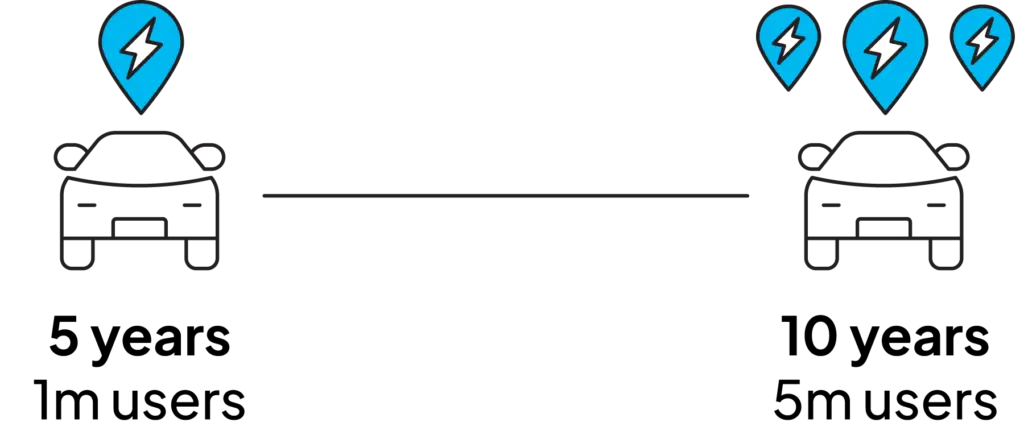
Zimbl is also embarking on a nationwide roll out of its hub model in new housing developments. The company is looking to create some 40 hubs to serve tens of thousands of homes over the next few years.
How can a local authority find out more about Zimbl?
If you’re interested in learning more about how Zimbl can add value to local authorities you’re involved in, please provide your details and we’ll be in touch. Thank you for your interest in the first instance.